From donation bins to Indian recycling hubs
What actually happens to the clothes we place in textile collection bins in Europe?
When I first began tracing these flows, I realised that for millions of garments, the story does not end with donation. Instead, I found out that some of these clothes travel thousands of kilometres to India. There, in the bustling recycling cluster of Panipat, a city in the northern Indian state of Haryana and one of the world’s largest textile recycling hubs, used textiles are sorted, cleaned, cut into fibres, spun into yarn, and transformed into rugs, blankets, placemats, and other home textiles. Many of these products are exported back to Europe and North America.
India is already one of the world’s most important hubs for textile recycling. At the centre of this system are thousands of micro, small, and medium-sized enterprises (MSMEs). These firms extend the life cycle of clothing that might otherwise end up in landfills or incinerators. They generate employment for workers from underprivileged backgrounds. Yet when my research team and I began working on this topic, we also saw the system’s vulnerabilities up close.
In many recycling units, outdated machinery generates large amounts of fibre dust, creating occupational health risks for workers. Many MSMEs do not have the digital infrastructure needed to document where their materials come from. Awareness of emerging international sustainability standards is often limited, especially among smaller enterprises with tight financial margins and limited staff capacity to manage social and environmental compliance requirements.
At the same time, the growing push for traceability and sustainability regulation in Europe risks creating a mismatch between increasingly stringent data, documentation, and compliance requirements and the technical, financial, and organisational capacities of MSMEs in the Global South to meet these requirements.
A regulatory mismatch in the making
The regulatory landscape in Europe is shifting rapidly. Under the European Green Deal, the European Union is introducing Digital Product Passports (DDPs)[1], corporate sustainability due diligence requirements[2], and expanded reporting obligations[3]. These initiatives are designed to improve transparency, prevent environmental harm, and protect human rights across global value chains.
This is the context in which the Green Threads project was established[4] – a four-year EU-funded initiative aimed at strengthening India’s textile recycling clusters and enhancing their integration into global circular value chains.
Our research[5] in these clusters has shown that awareness of upcoming EU sustainability legislation remains low. Many MSMEs are unable to systematically document the origins of the raw materials used in recycled fibres and do not have the digital systems and compliance staff that larger firms often take for granted.
This creates a serious risk. If sustainability requirements are introduced without accompanying support, well-intentioned European policies could unintentionally exclude Indian recyclers from export markets. That would threaten jobs and export earnings in India, reduce global recycling capacity, and potentially increase textile waste rather than reduce it.
To better understand this emerging mismatch—and to generate practical insights that could help the Panipat cluster address these challenges—we initiated the Green Threads research component within the broader project.
Understanding and shaping textile recycling systems: Insights from Green Threads
The Green Threads project brings together a range of actors working to strengthen sustainability in India’s textile recycling sector. Within this broader initiative, the research component led by the CBS team focuses on understanding how global textile recycling systems actually function—and how they are being reshaped by emerging sustainability regulations. To do so, the research combines mapping of material flows with in-depth field engagement in key recycling hubs, including interviews, site visits, and ongoing dialogue with MSMEs, workers, business associations, and international stakeholders. This approach grounds the analysis in the everyday realities of recycling economies, rather than abstract policy assumptions.
So far, the research has traced the journey of used clothing from Europe and North America into interconnected recycling clusters in India, shedding light on both their central role in global textile value chains and the structural challenges they face. The findings will feed into policy discussions under the EU SWITCH-Asia programme and inform engagement with international actors. One tangible outcome has been providing policy advice to the H&M Foundation on its planned collective action intervention in the Panipat cluster, aimed at strengthening sustainability practices in the cluster.
Looking ahead, the research will continue to generate insights and foster dialogue across stakeholders[6].
Lessons for policymakers, businesses, and researchers
For me, Green Threads illustrates what impact-oriented research can look like. Universities should not only diagnose problems; they should also engage with other stakeholders while maintaining the ability to critically analyse emerging policy and market dynamics. These experiences point to important lessons for different stakeholders:
- Policymakers:
Sustainability legislation needs to be paired with capacity-building and transitional support for smaller firms in key recycling hubs. In practice, this could include funding for digital traceability tools, support for certification processes such as the Global Recycled Standard (GRS), and training programmes to help MSMEs comply with emerging requirements such as DDPs. Policymakers can also build on existing initiatives which combine regulatory alignment with on-the-ground technical support. At the same time, traceability systems must be designed in ways that are technically feasible and financially realistic for MSMEs. Otherwise, we risk creating a system that is exclusive rather than inclusive. - Businesses: Brands and retailers depend on recycling clusters in the Global South to meet their circularity commitments. For example, major players such as H&M[7] and IKEA[8] have set ambitious targets for recycled content in their products. Supporting suppliers in upgrading traceability systems and improving working conditions is not charity; it is an investment in resilience. In practical terms, this could involve co-investing in digital traceability systems, providing longer-term sourcing commitments that enable suppliers to invest in compliance, or covering part of the costs associated with testing, certification, and data collection. For example, brands can begin by mapping their supply chains beyond first-tier suppliers, engaging directly with recycling clusters such as Panipat, and piloting traceability systems on specific product lines.
- Researchers: Mapping global material flows and identifying regulatory blind spots can help anticipate unintended consequences before they occur. Rather than simply supporting the implementation of existing policy agendas, research plays a critical role in first mapping the structure and dynamics of recycling value chains and clusters, and then examining how new regulatory interventions reshape them. This includes analysing how policies such as traceability requirements and DDPs affect supplier profitability, working conditions, and environmental outcomes in recycling hubs in the Global South. In doing so, research can help identify where well-intentioned policies risk producing exclusionary effects, and where targeted interventions are needed to ensure more equitable sustainability transitions.
Ultimately, the future of the used clothing industry will not be decided solely in European boardrooms or policy institutions. It will also be shaped in recycling hubs such as Panipat. If we want recycling economies that are environmentally sound, economically viable, and socially just, we must ensure that sustainability transitions strengthen—not undermine—the workers and enterprises who already keep clothes in circulation.
Through Green Threads, my hope is that we can contribute to precisely that outcome.
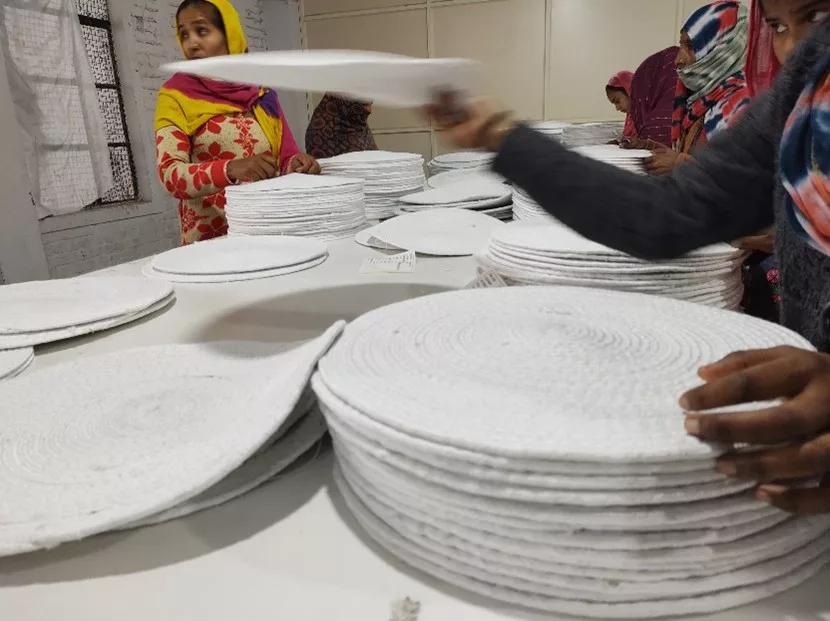
Photo 1: Female workers segregating placemats made from recycled yarn for quality check in a manufacturing unit in Panipat. ‘(author’s own)
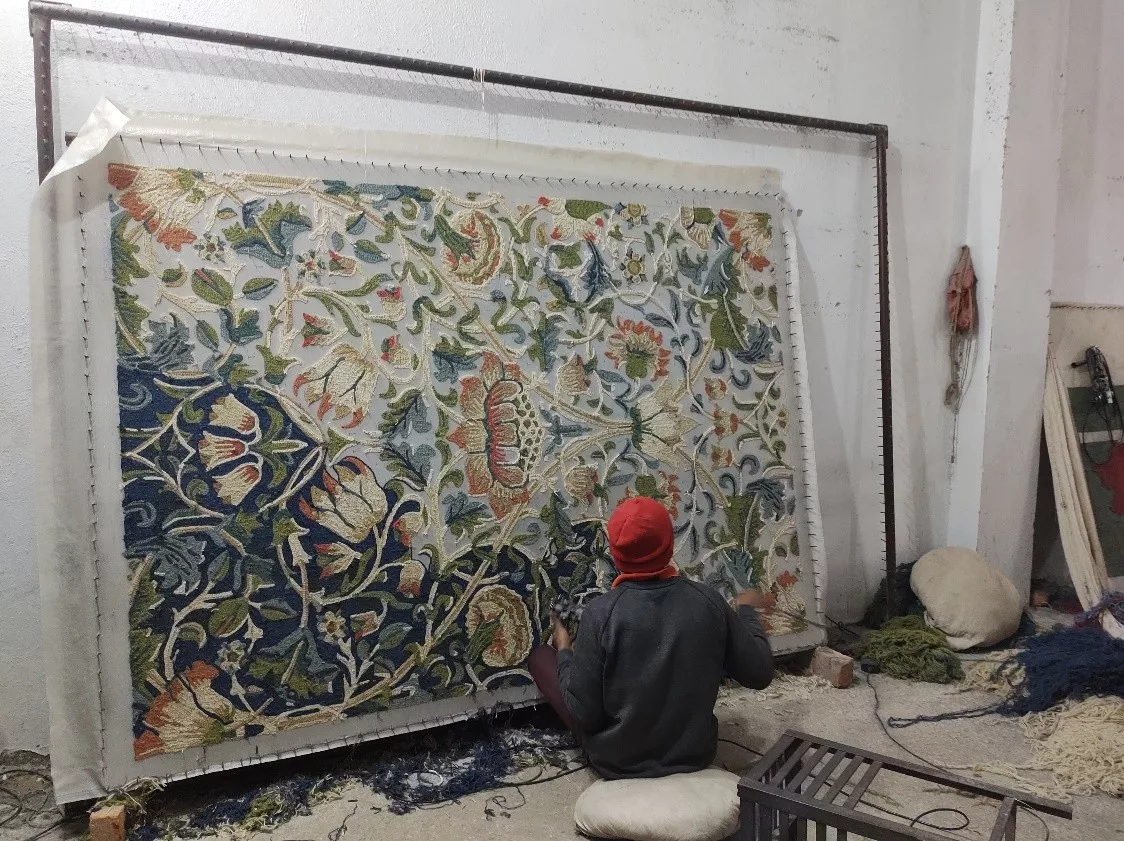
Photo 2: Tufting with partially recycled yarn in a rug manufacturing unit in Panipat. ‘(author’s own)
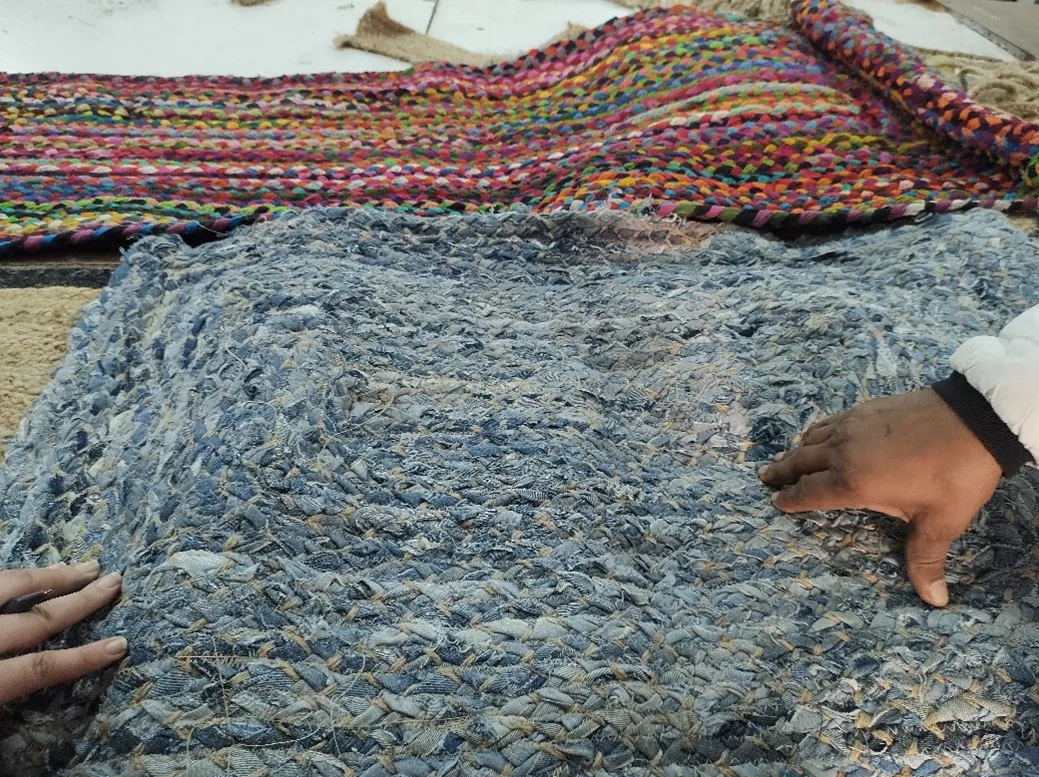
Photo 3: Floor mats made out of secondhand denim clothing and clothing with other materials in a manufacturing unit in Panipat. ‘(author’s own)
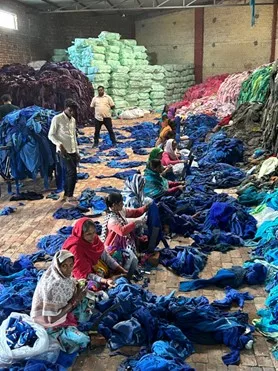
Photo 4: After segregation done as per color family, the post-consumption material is cut for making fibers in a Panipat unit. ‘(author’s own)
Footnotes:
[1] Digital records that store information on a product’s materials, origin, and environmental impact
[2] Rules requiring companies to identify and address environmental and human rights risks in their supply chains
[3] Requirements for companies to disclose their environmental and social impacts
[4] Green Threads is a four-year EU-funded initiative (2025–2028) headed by the Foundation for MSME clusters (FMC) in New Delhi along with consortium partners such as the Copenhagen Business School (CBS) and the Global Fashion Agenda (GFA). The project focuses on three major hubs—Panipat, Amroha, and Bhojpur—which together host more than 14,000 MSMEs and employ approximately 250,000 workers. By building cluster resilience and supporting MSMEs in adapting to evolving international requirements, Green Threads seeks to promote more transparent, competitive, and future-ready textile systems.
[5] The research is forthcoming.
[6] Forthcoming outputs from the CBS team include policy-oriented papers on traceability and DDPs in the Panipat recycling cluster, as well as on sustainability communication and branding opportunities and challenges for MSMEs in the cluster. These will be developed and launched in collaboration with the GFA and the FMC.
[7] H&M has committed to using 100 percent recycled or sustainably sourced materials by 2030, with a target of reaching 50 percent recycled content. Read more here: https://hmgroup.com/sustainability/circularity-and-climate/materials/
[8] IKEA aims to decouple the use of virgin, non-renewable materials from business growth and increase the share of recycled and renewable materials in its products to at least 90 percent. Learn more: https://www.ikea.com/global/en/our-business/sustainability/our-circular-agenda/
Curious about what the evidence says on textile and garment industry?
Explore the Evidensia Library to find credible studies, or use the Geographic Map to see where credible studies have been conducted and identify regional hotspots, the Knowledge Matrix to gain an overview of research across sectors, issues, outcomes, and approaches and spot evidence gaps, and the Visual Summaries to explore the findings of systematic reviews, where individual results from impact evaluation studies are plotted to show clearly what the evidence says on specific research questions.