Case Study: Living Wage Gap Assessment 2024 for Sustainable Shrimp Partnership (SSP), validated by IDH. Click on the image to zoom in.
Why we set out to measure living wages
Earlier in 2026, at the Sustainable Shrimp Partnership (SSP), we published a case study to answer a question, and make the results useful for the seafood industry. Could living wages be measured and credibly verified in shrimp aquaculture?
Together with IDH, we assessed three SSP member farms in Ecuador—the world’s leading exporter of shrimp[1]—to find out.
In recent years, food safety incidents, fraud, and other malpractice cases have weakened trust in the global food system. Therefore, people are looking more closely at quality, responsible production practices, and transparency, increasingly relying on credible information to verify the claims behind the products they buy[2].
At the same time, millions of workers around the world still do not earn enough to afford a decent standard of living for themselves and their families[3][4]. Living wages have become an increasingly important benchmark within responsible business practices and an emerging market expectation.
For eight years, at SSP we have worked to promote high social and environmental standards in shrimp aquaculture[5], in collaboration with the Aquaculture Stewardship Council (ASC)[6]. But we decided to add an additional layer: objectively assessing whether the people behind our shrimp earn enough to ensure a decent standard of living, while generating the credible evidence needed to build trust in how our shrimp is produced.
The 2023 pilot
For this reason, in 2023 we carried out the first living wage assessment in Ecuador’s shrimp industry. The pilot evaluated and verified living wage gaps at aquaculture farms, and was developed together with ASC and IDH[7].
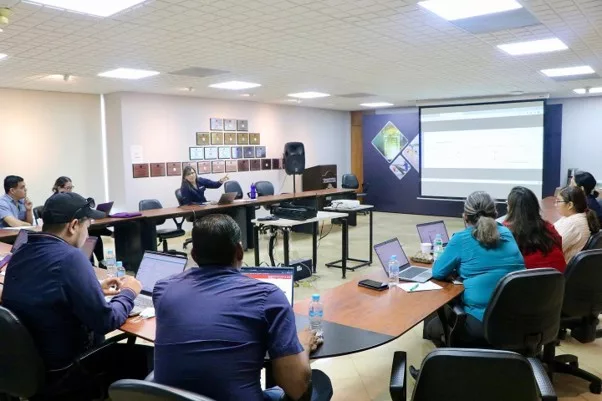
Representatives from the participating SSP shrimp farms attended a training session on using the IDH Salary Matrix to assess living wages during the 2023 ASC pilot project.
The results, which in several cases exceeded the regional living wage benchmarks (USD 495 – Anker Methodology), gave us the confidence to advance toward a more structured assessment.
Scaling up: the 2025 assessment
In June 2025, we partnered once again with IDH. Together, we evaluated SSP member farms Cachugran (Omarsa), Marfrisco (Promarisco), and Chongón (Corporación Lanec) to determine, through comparable and independently verifiable data, if our members met or exceeded the living wage threshold, providing a technical basis to support compliance with fair labor conditions.
Living wages are calculated using established methodologies that estimate the real cost of a decent standard of living in a given context. In our case, we used IDH’s Salary Matrix, a tool based on the internationally recognized Anker methodology, which enabled us to compare compensation structures—using 2024 payroll data—against the applicable living wage benchmark while taking into account the actual cost of living in the regions where the farms operate. The process included data collection and analysis, as well as third-party verification through audits, supporting the reliability of the results.
Farm perspectives: expectations and concerns
When the project began, our farms faced different expectations and concerns regarding living wages. Human Talent Manager at Corporación Lanec, Agustín Vera, shared that he had two main concerns: “On one hand, there was technical uncertainty about whether our compensation structures truly covered the cost of living for employees and their families, beyond legal compliance. On the other, there was concern about the impact that a potential adjustment could have on the financial sustainability and competitiveness of the business,” he explained.
In the case of Omarsa, which had already participated in the pilot assessment in 2023, the process was approached with greater confidence. “The main expectation was to validate, through a technical and objective methodology, that our practices were aligned with the concept of a living wage and to strengthen the transparency of our management,” said Alex Quintana, Omarsa’s Deputy Human Resources Manager.
Lessons from the process
The main challenge our members faced was the level of detail required for data collection and validation, considering the diversity of roles and compensation structures across the farms. “From an operational standpoint, it required constant coordination between teams; however, this effort strengthened our internal processes and our culture of collaborative work,” Quintana explained.
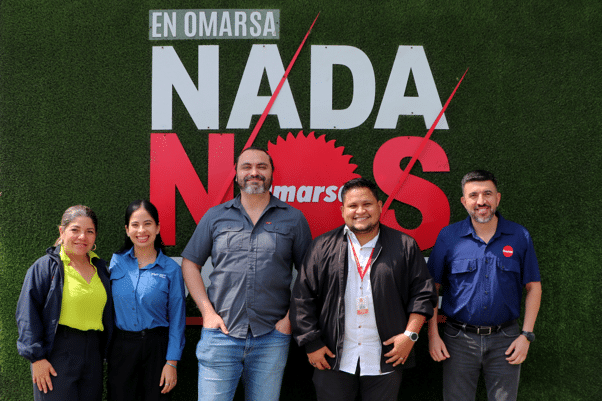
Representatives from Omarsa, SSP, and the independent auditor following the third-party audit of the IDH Salary Matrix assessment.
Vera noted that the rigor of the process was itself valuable: “It did not focus solely on nominal wages, but also incorporated benefits, regional context, and socioeconomic realities, allowing for a much more comprehensive view.”
The project also included capacity building within SSP farms, enabling them to understand the methodology, interpret the results, and communicate their performance transparently.
For our members, measuring living wages became a management tool rather than a business risk. “Far from weakening the company, it allows us to anticipate, make better decisions, and strengthen relationships with employees and international markets. It also helped us understand that adjustments should be targeted, prioritizing specific roles or situations rather than applying broad, generalized measures,” affirmed Vera.
Key findings
The assessment produced three key findings:
- The participating farms—Cachugran (OMARSA), Marfrisco (Promarisco), and Corporación Lanec—met or exceeded the applicable living wage benchmark for 2024, according to the Anker methodology.
- The farms used IDH’s Salary Matrix tool to compare their compensation structures with the relevant living wage benchmark and successfully passed a third-party audit.
- One of the project’s key contributions was demonstrating that this type of assessment is feasible in the Ecuadorian context. The country’s strong labor framework facilitated data collection for wage gap analysis[8], laying the groundwork for future assessments and scaling across the industry.
What’s next
Taken together, these results answer the question that started this project. Living wages can be measured, independently verified, and integrated into the management of shrimp aquaculture. Now, our next step is to scale the approach. This involves integrating living wages as a formal criterion within SSP standards, establishing clear verification mechanisms, and expanding assessments across the value chain, including processing plants.
It also means developing practical ways for companies to communicate their performance through credible, verifiable claims, while making use of existing audit systems to facilitate implementation.
Ultimately, we hope the experience of Ecuadorian shrimp encourages more seafood producers—and other food sectors—to undertake a similar assessment. The sooner we measure, the sooner we can understand, improve, and build the trust and responsibility that food systems require.
Want to learn more about SSP’s work on living wages? Subscribe to our newsletter
Footnotes
[1] Food and Agriculture Organization of the United Nations. (2024). Trade of aquatic products. In The State of World Fisheries and Aquaculture 2024: Blue Transformation in Action. https://doi.org/10.4060/cd0683en
[2] Wu, W., Zhang, A., van Klinken, R. D., Schrobback, P., & Muller, J. M. (2021). Consumer Trust in Food and the Food System: A Critical Review. Foods, 10(10), 2490. https://doi.org/10.3390/foods10102
[3] United Nations Global Compact. (2025, April 21). Increasing respect for labour rights and paying living wages to advance decent work for all. https://unglobalcompact.org/compactjournal/increasing-respect-labour-rights-and-paying-living-wages-advance-decent-work-all
[4] A decent standard of living includes not just food and housing, but also clean water, education, healthcare, transportation, clothing, and a small margin for unforeseen expenses. Read more at: Global Living Wage Coalition. (s. f.). The Anker methodology for estimating a living wage. https://www.globallivingwage.org/about/anker-methodology/
[5] Learn more about SSP standards at https://sustainableshrimppartnership.org/product-criteria/
[6] ASC certifies environmental and social standards for farmed seafood production. Learn more here: https://asc-aqua.org/
[7] IDH is a Netherlands-based organization that promotes sustainability across global supply chains and leads the Living Wages Roadmap platform to develop practical solutions. Learn more at: https://idh.org/
[8] Rainforest Alliance. (2025, October 16). Policy for Ecuador: Exception on living wage. https://knowledge.rainforest-alliance.org/docs/exception-policy-on-living-wage-in-ecuador
Curious about what the evidence says on living wages?
Explore the Evidensia Library to find credible studies, or use the Geographic Map to see where credible studies have been conducted and identify regional hotspots, the Knowledge Matrix to gain an overview of research across sectors, issues, outcomes, and approaches and spot evidence gaps, and the Visual Summaries to explore the findings of systematic reviews, where individual results from impact evaluation studies are plotted to show clearly what the evidence says on specific research questions.